I have always wondered what the normal error rates are on LTO tapes. Now I know, or at least I know what the error rates are for the tapes I have.
The 51 LTO-8 tapes I have in my pool have an average of 1.1 recoverable errors (read and write) per TiB read and written. But even though I only buy HPE tapes, the green Q2078A ones, I know they more or less randomly actually come from either Sony or Fujifilm, the only two manufacturers of LTO tapes in the world. You can’t make it out by looking at the cartridge, but the built-in EEPROM in the cartridge holds that information, such as manufacturer, date of manufacture, lot id, total bytes read and written (lifetime) and six types of errors, also lifetime scoped. With a bit of software, you can get all that data from the tape cartridges.
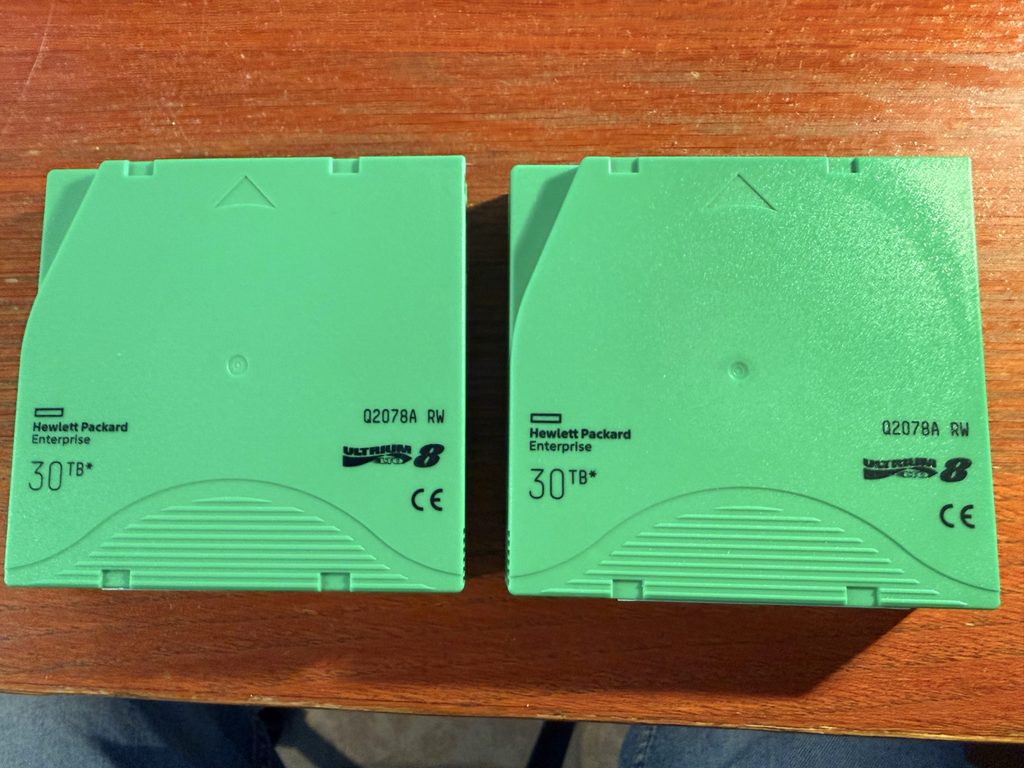
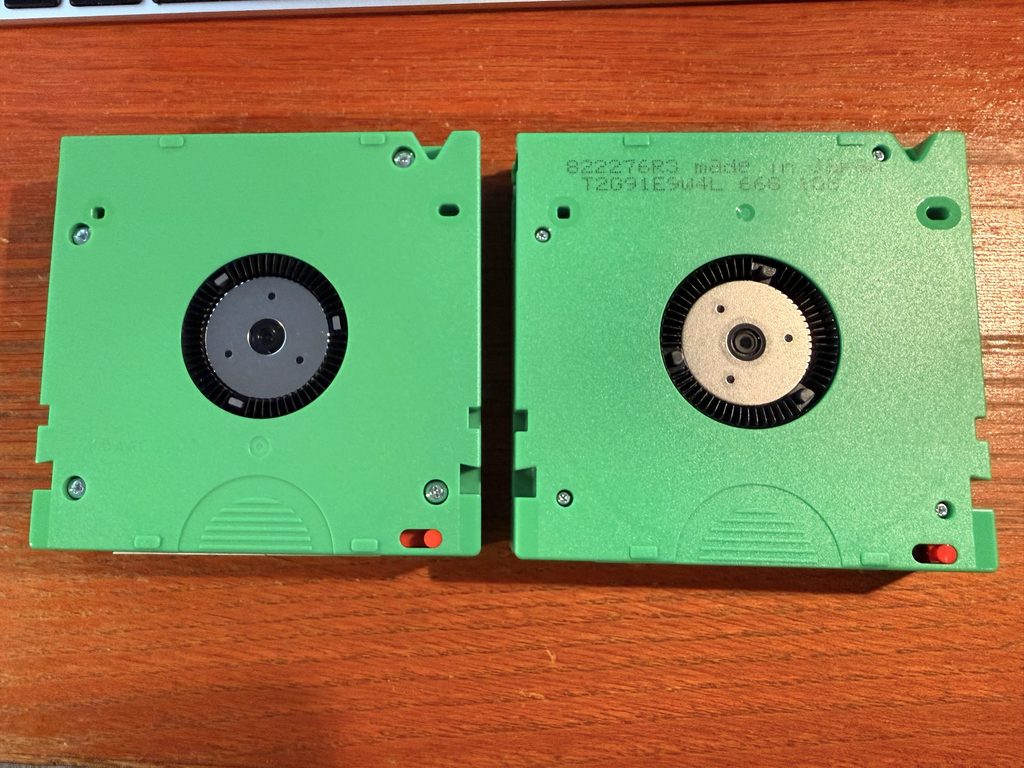
Now, for the results… I had suspected for a while that I either had two manufacturers with quite different error rates, or possibly differences between manufacturing lots, and I turned out to be right. Just look at this histogram:
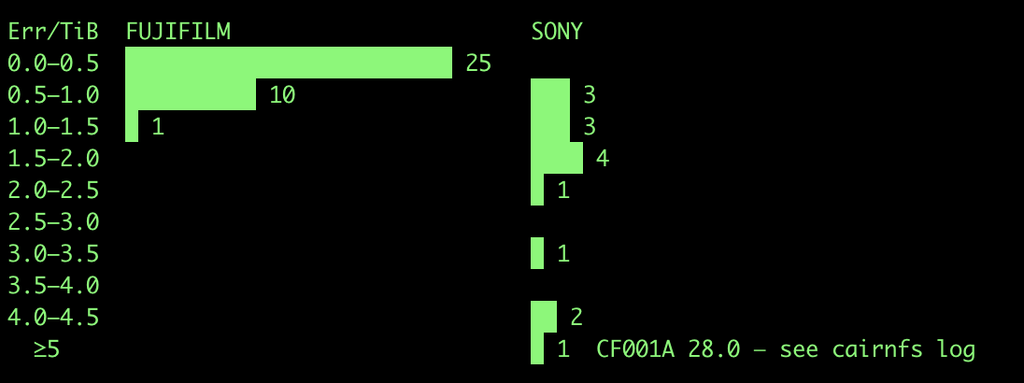
Before judging Sony too hard, you should disregard the last three tapes, the ones with more than 4 errors/TiB, since I had a period of too low humidity last winter which affected the tapes. Maybe even the one at 3 errors was affected. Then while trying out mounting the drive in a computer case with insufficient ventilation of the drive, I more or less cooked a Sony tape; that’s the 28 errors/TiB one.
But still, Fujifilm is remarkably consistent and low in error rates. Even though one or two of those tapes also suffered the dry spell during the winter (but I don’t know which ones).
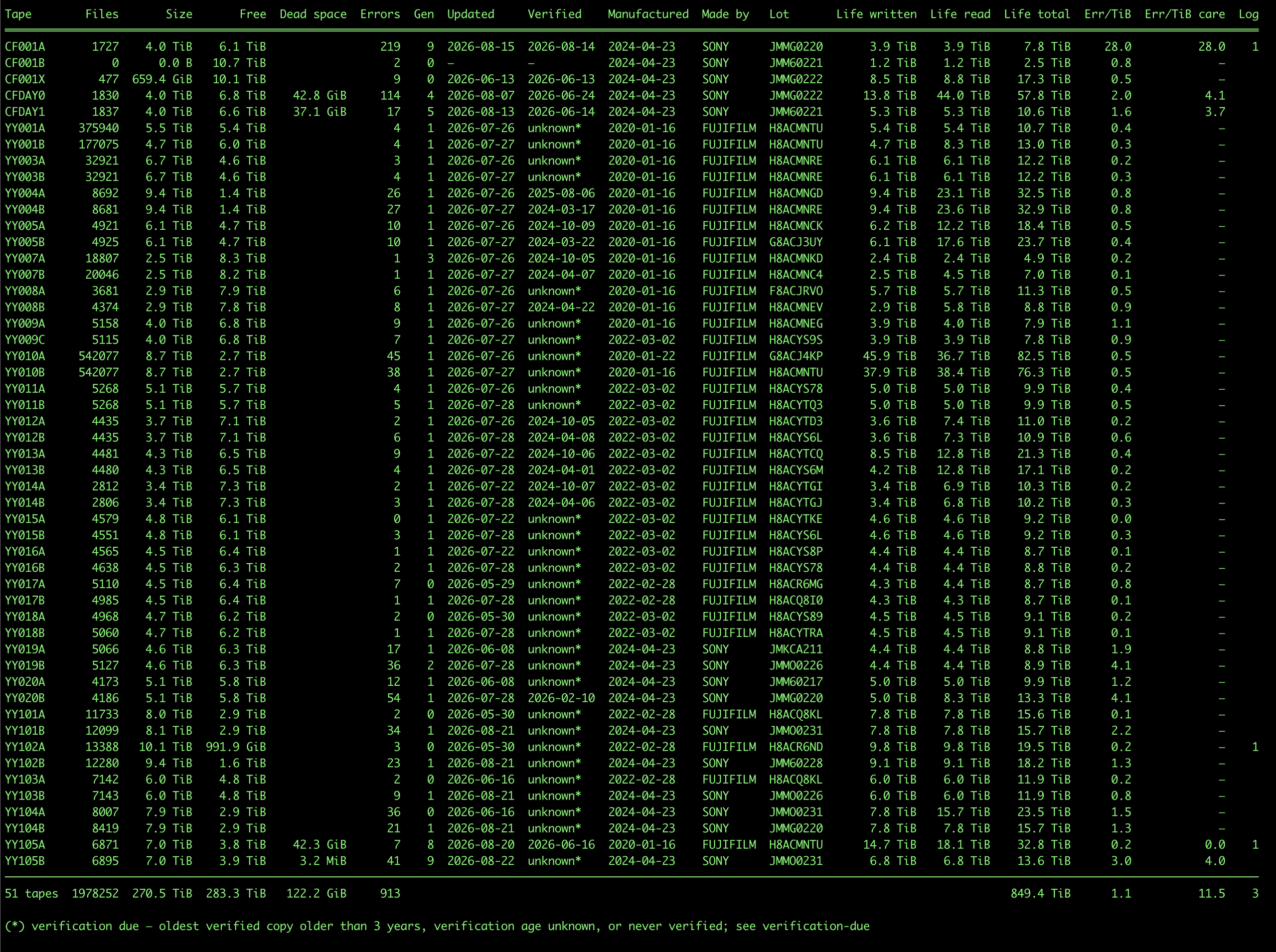
The full tape statistics list looks like:
And a split based on manufacturer and manufacturing date (reflecting batches):

Don’t worry about the “care” column, that is just the error rate since a recent start date, since the tapes are in the “care” of my new software.
Now, if you wonder why I have 270 TiB data on those tapes: this is the source material for our Udemy math courses in duplicate. That stuff takes a LOT of space. Admittedly, our courses are huge, too (16 courses of around 50 hours each, plus 3 small 2 hour courses).